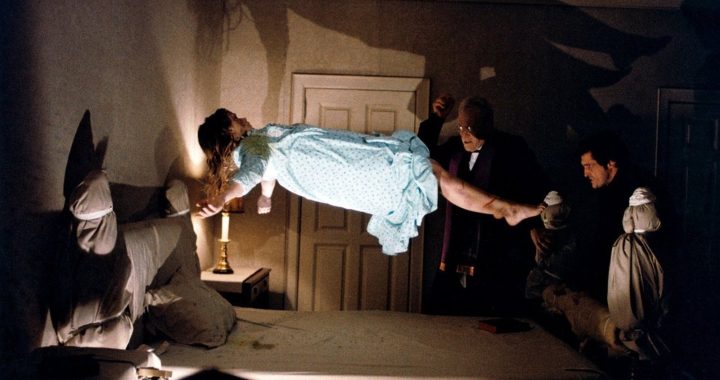
Anthony Hopkins is on screen for roughly 16 minutes of The Silence of the Lambs, by the most-cited count, and he still won Best Actor. Every film below works the same way: it hurts you through anticipation, suggestion and a slow erosion of trust rather than through the body count. Here are the 25 psychological thriller movies we would put in front of anyone, ranked, with the year, the director and where you can watch each one.
Key Takeaways
– Top pick: The Silence of the Lambs (1991) is the most complete psychological thriller ever made: a perfect script, two career-best performances, and a Big Five Oscar sweep.
– Best for twist lovers: Memento, Shutter Island and A Tale of Two Sisters reward a second viewing more than almost anything else on the list.
– Best international entry points: Oldboy, Parasite, Caché and The Vanishing.
– Streaming reality check: A film’s studio library usually decides where it streams. Universal titles drift to Peacock, Warner titles to HBO Max, Paramount titles to Paramount+, Fox titles to Hulu and Disney+, and MGM titles to Prime Video. Almost everything here can also be rented on Apple TV and Prime Video.
– NYC bonus: Several of these, especially Vertigo, Mulholland Drive and Don’t Look Now, turn up regularly at Film Forum, Metrograph and IFC Center, and a 35mm print beats any stream.
How We Ranked These Films
A psychological thriller lives inside someone’s head: a detective’s obsession, a victim’s doubt, a narrator who can’t be trusted. Horror overlaps with the genre, and a few entries here sit close to that line, but we prioritized films where the real threat is perception rather than a monster. Every pick had to meet four tests:
- The mind is the battlefield. Tension comes from what characters believe, fear or misremember, not from jump scares.
- It holds up on a rewatch. A great psychological thriller plays differently once you know the ending, and the best ones play better.
- Craft you can point to. We looked for specific achievements in performance, editing, score and structure, the kind you can name.
- Influence. Films that changed how the genre works, or that later filmmakers clearly studied, got a bump.
We deliberately capped how much we leaned on any single director, though David Fincher still lands three times because he has earned it.
A note on availability: streaming deals rotate monthly, so the “where to watch” lines reflect US availability at time of writing, plus the library logic that predicts where each film tends to land. Check your service’s search filters before you settle in for the night.
Quick-Reference Comparison Table
| Rank | Film | Year | Director | The Mind Game | Where to Watch (US) |
|---|---|---|---|---|---|
| 1 | The Silence of the Lambs | 1991 | Jonathan Demme | Interrogation as seduction | Prime Video / MGM+ library; rent |
| 2 | Vertigo | 1958 | Alfred Hitchcock | Obsession and remaking a woman | Peacock (Universal); rent |
| 3 | Mulholland Drive | 2001 | David Lynch | Dream versus reality | Criterion Channel; rent |
| 4 | Psycho | 1960 | Alfred Hitchcock | A split personality | Peacock (Universal); rent |
| 5 | Persona | 1966 | Ingmar Bergman | Two identities merging | Criterion Channel; HBO Max |
| 6 | Don’t Look Now | 1973 | Nicolas Roeg | Grief and premonition | Criterion Channel; rent |
| 7 | The Shining | 1980 | Stanley Kubrick | Isolation and madness | HBO Max (Warner); rent |
| 8 | Rosemary’s Baby | 1968 | Roman Polanski | Paranoia, possibly justified | Paramount+; rent |
| 9 | Zodiac | 2007 | David Fincher | Obsession with an unsolved case | Paramount+; rent |
| 10 | Oldboy | 2003 | Park Chan-wook | Revenge as a trap | Rent or buy |
| 11 | Parasite | 2019 | Bong Joon-ho | Class deception | Rent or buy; rotates on Hulu/HBO Max |
| 12 | Get Out | 2017 | Jordan Peele | Weaponized politeness | Peacock (Universal); rent |
| 13 | Black Swan | 2010 | Darren Aronofsky | Perfectionism and psychosis | Hulu / Disney+; rent |
| 14 | Memento | 2000 | Christopher Nolan | Memory loss, told backward | Rent or buy |
| 15 | Gone Girl | 2014 | David Fincher | A marriage as a con | Hulu / Disney+; rent |
| 16 | Misery | 1990 | Rob Reiner | Captivity and fandom | HBO Max (Castle Rock/Warner); rent |
| 17 | Se7en | 1995 | David Fincher | A killer’s moral sermon | HBO Max (New Line/Warner); rent |
| 18 | Prisoners | 2013 | Denis Villeneuve | A father’s descent | HBO Max (Warner); rent |
| 19 | A Tale of Two Sisters | 2003 | Kim Jee-woon | Trauma and haunting | Rent or buy |
| 20 | The Machinist | 2004 | Brad Anderson | Insomnia and guilt | Rent or buy |
| 21 | Shutter Island | 2010 | Martin Scorsese | Institutional gaslighting | Paramount+; rent |
| 22 | Caché | 2005 | Michael Haneke | Surveillance and buried guilt | Rent or buy |
| 23 | The Vanishing | 1988 | George Sluizer | The need to know | Criterion Channel; rent |
| 24 | Gaslight | 1944 | George Cukor | The original manipulation plot | HBO Max (Warner); rent |
| 25 | Perfect Blue | 1997 | Satoshi Kon | Celebrity and fractured identity | Rent or buy (GKIDS) |
The 25 Best Psychological Thriller Movies, Ranked
25. Perfect Blue (1997)
Satoshi Kon’s debut feature follows Mima Kirigoe, a pop idol who quits her group to become an actress and then watches her sense of self dissolve as a stalker, an obsessive fan website and her own new role all start rewriting who she is. Animation lets Kon cut between reality, film set and hallucination without a single visual seam, so you lose your footing exactly as Mima does. Watch it alongside Black Swan and the parallels jump out. It earns a spot because few films have predicted internet-era identity anxiety this sharply. Where to watch: GKIDS handles the US release; rent or buy digitally.
24. Gaslight (1944)
The verb comes from here, more or less. George Cukor’s adaptation of Patrick Hamilton’s play stars Ingrid Bergman as a newlywed whose husband, played with silky menace by Charles Boyer, systematically convinces her she is losing her mind, dimming the gas lamps and then denying it. Bergman won her first Oscar for the role, and a 17-year-old Angela Lansbury made her screen debut as a smirking maid and picked up a nomination. Some of the staging feels stagey now, but the core mechanism of manipulation is the template for half this list. Where to watch: An MGM title now in the Warner library, so it tends to stream on HBO Max and air on TCM; rent elsewhere.
23. The Vanishing (1988)
George Sluizer’s Dutch-French film, adapted from Tim Krabbé’s novel The Golden Egg, begins when a young woman disappears from a busy highway rest stop and her boyfriend spends the next three years needing to know what happened. Unusually, Sluizer shows you the kidnapper early, a mild chemistry teacher named Raymond Lemorne, and the dread comes from watching his methodical rehearsals rather than from any mystery about his identity. The ending is one of the most quietly devastating in cinema. Skip Sluizer’s own 1993 Hollywood remake with Jeff Bridges, which loses its nerve. Where to watch: A Criterion release, frequently on the Criterion Channel; rent digitally.
22. Caché (2005)
Michael Haneke won Best Director at Cannes for this film about a Parisian TV host (Daniel Auteuil) and his wife (Juliette Binoche) who start receiving anonymous videotapes of their own house. The tapes force Georges back toward a childhood act of cruelty tied to France’s repression of Algerians in 1961, and Haneke refuses to hand you the comfort of a culprit. The long, static opening shot trains you to scan every frame for clues, which is exactly the paranoia the film wants. People still argue about the final image, and they should. Where to watch: Rent or buy digitally; it periodically appears on arthouse streamers.
21. Shutter Island (2010)
Martin Scorsese adapted Dennis Lehane’s novel into a fever dream about U.S. Marshal Teddy Daniels (Leonardo DiCaprio) investigating a missing patient at Ashecliffe, a hospital for the criminally insane on an island in Boston Harbor in 1954. Some viewers clock the twist early, and Scorsese seems not to care, because the pleasure is in how carefully he plants it: the actors’ strange reactions, the continuity “errors” that turn out to be deliberate. Mark Ruffalo and Ben Kingsley are both excellent, and the film says something real about trauma and mental health treatment in that era. Where to watch: A Paramount title, usually on Paramount+; rent elsewhere.
20. The Machinist (2004)
Christian Bale reportedly dropped more than 60 pounds to play Trevor Reznik, a factory worker who hasn’t slept in a year and starts finding cryptic Post-it notes on his fridge. Director Brad Anderson shot in Barcelona standing in for an unnamed American city, draining the images of color until Bale’s skeletal frame becomes the film’s dominant visual. The guilt-driven mystery resolves cleanly, which some find too tidy, but Bale’s physical commitment and Jennifer Jason Leigh’s warm, sad turn keep it gripping. It is the purest example here of a film that externalizes a conscience. Where to watch: Rent or buy digitally.
19. A Tale of Two Sisters (2003)
Kim Jee-woon’s film, loosely based on the Korean folk tale Janghwa Hongryeon, follows two sisters returning from a psychiatric stay to a remote country house, a cold stepmother and a father who seems to be hiding something. Yes, there are ghostly images and a few real scares, but the film is fundamentally about grief, and its final act reframes almost every scene you have just watched. The production design, all floral wallpaper and dim green light, makes the house itself feel like a memory going wrong. Hollywood remade it as The Uninvited in 2009; stick with the original. Where to watch: Rent or buy digitally; check horror-focused streamers.
18. Prisoners (2013)
When two little girls vanish on Thanksgiving in suburban Pennsylvania, Keller Dover (Hugh Jackman) decides the police, led by Jake Gyllenhaal’s tic-ridden Detective Loki, are moving too slowly, and he abducts the chief suspect himself. Denis Villeneuve turns a procedural into a moral pressure cooker, asking how far you would go and making you feel complicit in the answer. Roger Deakins’ cinematography, all wet gray daylight and sodium lamps, makes the town feel sealed off from the rest of the world. Paul Dano and Melissa Leo add layers of unease. Where to watch: A Warner Bros. release, so it usually lands on HBO Max; rent elsewhere.
17. Se7en (1995)
David Fincher’s breakthrough pairs a weary detective on the edge of retirement (Morgan Freeman) with a hotheaded newcomer (Brad Pitt) tracking a killer who stages each death around one of the seven deadly sins. The city is never named and it never stops raining, which is the point: this is a moral landscape more than a place. What lifts it into psychological territory is the third act, when the killer stops hiding and starts arguing, and the film becomes a debate about whether the world deserves saving. That box in the desert still lands like a punch. Where to watch: A New Line title in the Warner library, typically on HBO Max; rent elsewhere.
16. Misery (1990)
Rob Reiner had already made Stand By Me, The Princess Bride and When Harry Met Sally… when he took on this Stephen King adaptation, and if you have followed his career as a director, you know how unexpected that turn was. James Caan plays novelist Paul Sheldon, rescued from a car wreck by his “number one fan” Annie Wilkes, who keeps him bedridden and furious that he killed off her favorite character. Kathy Bates won Best Actress for a performance that swings from chirpy to murderous in a single breath, and William Goldman’s script keeps the claustrophobia airtight. The hobbling scene remains one of the most wince-inducing in mainstream cinema. Where to watch: A Castle Rock film, usually streaming on HBO Max; rent elsewhere.
15. Gone Girl (2014)
Gillian Flynn adapted her own bestseller, and David Fincher turned it into the sharpest dissection of a marriage in modern thrillers. Ben Affleck plays Nick Dunne, whose wife Amy (Rosamund Pike) vanishes on their fifth anniversary, and the media circus that follows decides his guilt long before the police do. The midpoint shift in perspective is the film’s real twist, and Pike’s “cool girl” monologue is a career-defining stretch of acting that earned her an Oscar nomination. It doubles as a satire of cable news, which has only aged better. Where to watch: A 20th Century Fox release, now in Disney’s library, so look on Hulu or Disney+; rent elsewhere.
14. Memento (2000)
Christopher Nolan’s second feature, adapted from his brother Jonathan’s short story, follows Leonard Shelby (Guy Pearce), a man who cannot form new memories and hunts his wife’s killer using Polaroids, notes and tattoos. The color scenes run backward while black-and-white scenes run forward, and the two timelines meet at the end, which is also the beginning. That structure makes you experience Leonard’s amnesia directly, because you never know what just happened either. It is a puzzle box, but a sad one, about how people build the stories they need to survive. Where to watch: Rights have bounced around since its independent release; rent or buy digitally and check your services.
13. Black Swan (2010)
Natalie Portman won Best Actress for playing Nina Sayers, a dancer in a New York ballet company who lands the dual role of the White and Black Swan and starts coming apart under the strain. Darren Aronofsky shot much of it handheld around Manhattan, including outside Lincoln Center, and the subway rides and cramped Upper West Side apartment give Nina’s breakdown a recognizable, specifically New York claustrophobia. Mila Kunis, Vincent Cassel and Barbara Hershey as Nina’s smothering mother all feed her paranoia. The body-horror flourishes divide people, but the final performance sequence is pure, delirious cinema. Where to watch: A Fox Searchlight title, so it tends to stream on Hulu or Disney+; rent elsewhere.
12. Get Out (2017)
Jordan Peele won the Oscar for Best Original Screenplay for his debut, in which Chris (Daniel Kaluuya) visits his white girlfriend’s liberal parents for a weekend that gets steadily stranger. The genius is that the early horror is purely social: awkward compliments, a groundskeeper’s fixed smile, a mother stirring tea. By the time the Sunken Place arrives, Peele has made you feel the psychological cost of constant vigilance. Kaluuya’s tear-streaked face in that sequence is one of the defining images of the decade. Where to watch: A Universal release, usually on Peacock; rent elsewhere.
11. Parasite (2019)
Bong Joon-ho’s Palme d’Or winner became the first non-English-language film to win Best Picture, and it earns a spot here for its second half, when a con about a poor family infiltrating a rich household turns into a waking nightmare. Song Kang-ho anchors the film as a father whose humiliation builds quietly until it erupts. Bong uses architecture as psychology: staircases, a basement, a sunken living room window all map the class divide. The famous rainstorm sequence, with the family fleeing downhill through a flooding Seoul, is the hinge on which the whole film turns. Where to watch: Neon’s release has rotated between Hulu and HBO Max; rent or buy digitally if it isn’t on your service.
10. Oldboy (2003)
Park Chan-wook’s revenge story begins with Oh Dae-su (Choi Min-sik) locked in a shabby hotel room for 15 years without explanation, then abruptly released and given five days to find out why. It won the Grand Prix at Cannes in 2004 under a jury led by Quentin Tarantino, and the single-take hallway fight is still studied by action directors. What makes it a psychological thriller rather than an action film is that the real weapon is information, and the reveal recasts the whole revenge plot as a trap. It is brutal and not for everyone. Where to watch: Rent or buy digitally; avoid the 2013 Spike Lee remake if you want the real thing.
9. Zodiac (2007)
David Fincher spent his own obsession on a case that never closed, and the result is the most patient film on this list. Jake Gyllenhaal plays Robert Graysmith, a San Francisco Chronicle cartoonist who becomes consumed by the Zodiac killings, alongside Mark Ruffalo’s detective and Robert Downey Jr.’s spiraling crime reporter. The early killings are filmed with clinical, terrifying flatness, and the basement scene with a projectionist may be the scariest sequence Fincher has ever staged. Mostly, though, it is about what obsession does to the people who cannot let a mystery stay unsolved. Where to watch: A Paramount release in the US, usually on Paramount+; rent elsewhere.
8. Rosemary’s Baby (1968)
Roman Polanski’s adaptation of Ira Levin’s novel stars Mia Farrow as a young wife who moves into the Bramford, a gothic Manhattan apartment house, and becomes convinced her nosy elderly neighbors have designs on her pregnancy. New Yorkers will recognize the exteriors: that is the Dakota on Central Park West at 72nd Street. The film’s brilliance is that it keeps you uncertain for most of its running time whether Rosemary is in danger or simply being dismissed by everyone around her, a theme that feels painfully current. Ruth Gordon won Best Supporting Actress as the meddling neighbor Minnie Castevet. Where to watch: A Paramount title, usually on Paramount+; rent elsewhere.
7. The Shining (1980)
Stephen King famously disliked Stanley Kubrick’s version, but the film outgrew the book’s shadow long ago. Jack Nicholson plays Jack Torrance, a blocked writer who takes a winter caretaker job at the isolated Overlook Hotel with his wife (Shelley Duvall) and son, and slowly loses his grip. Kubrick’s Steadicam glides through corridors, and the hotel’s impossible floor plan makes the building itself feel like a disordered mind. It sits closer to horror than most entries here, but the true subject is a family trapped with a man unraveling, which is why it ranks so high on any list of the most disturbing films ever made. Where to watch: A Warner Bros. film, typically on HBO Max; rent elsewhere.
6. Don’t Look Now (1973)
Nicolas Roeg’s adaptation of Daphne du Maurier’s story follows John and Laura Baxter (Donald Sutherland and Julie Christie), a couple grieving their drowned daughter, who travel to off-season Venice for his church restoration job. A blind psychic tells Laura their daughter is trying to warn them, and a small figure in a red coat keeps appearing at the edge of John’s vision. Roeg’s fractured editing scatters glimpses of the future through the present, so the ending feels both shocking and inevitable. Venice has never looked so beautiful or so menacing. Where to watch: A Criterion release, often on the Criterion Channel; rent digitally, or catch it at Film Forum or Metrograph when it returns.
5. Persona (1966)
Ingmar Bergman’s most radical film puts an actress who has stopped speaking (Liv Ullmann) in the care of a young nurse (Bibi Andersson) at a seaside cottage, where the nurse talks and talks until the two women’s identities start to bleed together. Sven Nykvist’s photography produces the famous composite shot of their two faces merging into one. The film literally burns through its own celluloid at one point, a reminder that you are watching a constructed thing. It has fed directly into Mulholland Drive, 3 Women and countless other identity thrillers. Where to watch: Bergman’s catalog lives on the Criterion Channel and often in the Criterion section of HBO Max; rent elsewhere.
4. Psycho (1960)
Alfred Hitchcock killed his star in the first act, ordered theaters not to admit anyone after the movie had started, and changed what an American audience expected from a thriller overnight. Janet Leigh’s Marion Crane steals money and checks into the Bates Motel, and the shower scene, built from 78 camera setups and 52 cuts and scored with Bernard Herrmann’s stabbing strings, is the most dissected sequence in film history. Anthony Perkins’ Norman Bates is so likable that the final revelation still hits hard. Fun footnote for horror fans: his son, Osgood Perkins, directed Longlegs (2024). Where to watch: A Universal title, usually on Peacock; rent elsewhere.
3. Mulholland Drive (2001)
David Lynch, who died in January 2025, began this as a rejected ABC television series pilot and reshaped it into the film that topped BBC Culture’s 2016 critics’ poll of the best movies of the 21st century. Naomi Watts plays Betty, a bright-eyed actress newly arrived in Los Angeles, who helps an amnesiac woman (Laura Harring) piece together her identity, until the film flips and everything you thought you understood about both women curdles. The diner scene with the man behind Winkie’s and the “Llorando” performance at Club Silencio are among the most unsettling moments in modern cinema. Watts’ audition scene alone justifies the ranking. Where to watch: A Criterion release, frequently on the Criterion Channel; rent digitally, and watch for it on IFC Center’s midnight slate.
2. Vertigo (1958)
In 2012, Vertigo knocked Citizen Kane off the top of Sight & Sound’s once-a-decade critics’ poll, and it remains near the summit. James Stewart plays Scottie Ferguson, a retired San Francisco detective with acrophobia, hired to follow a friend’s wife (Kim Novak) who seems possessed by a dead woman. The second half, in which Scottie tries to remake another woman into the one he lost, is among the darkest studies of male obsession Hollywood has produced. Hitchcock’s dolly zoom, Herrmann’s spiraling score and Novak’s double performance make it hypnotic. Where to watch: A Universal title, usually on Peacock; rent elsewhere, or see it in 70mm or 35mm whenever a New York repertory house runs it.
1. The Silence of the Lambs (1991)
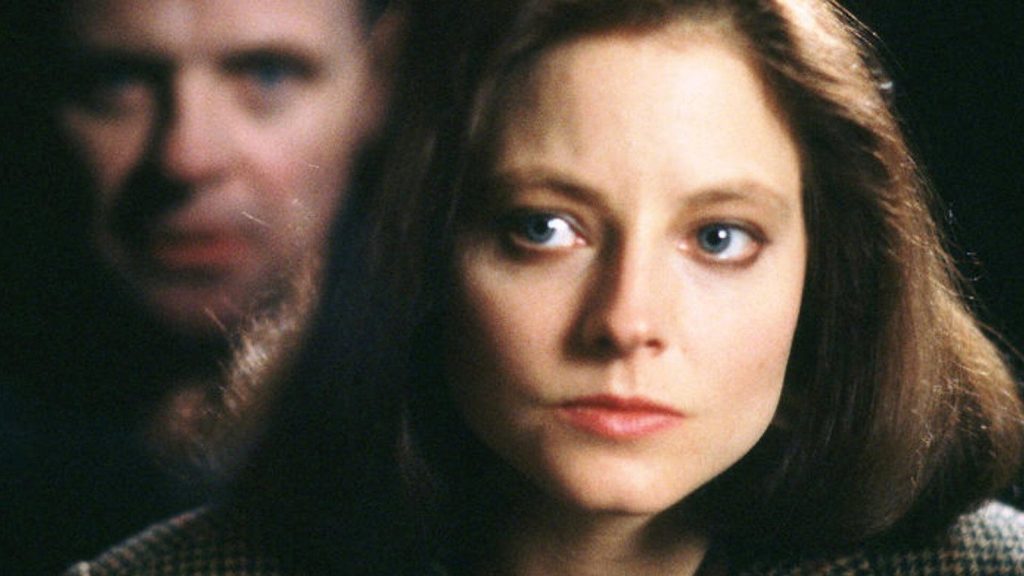
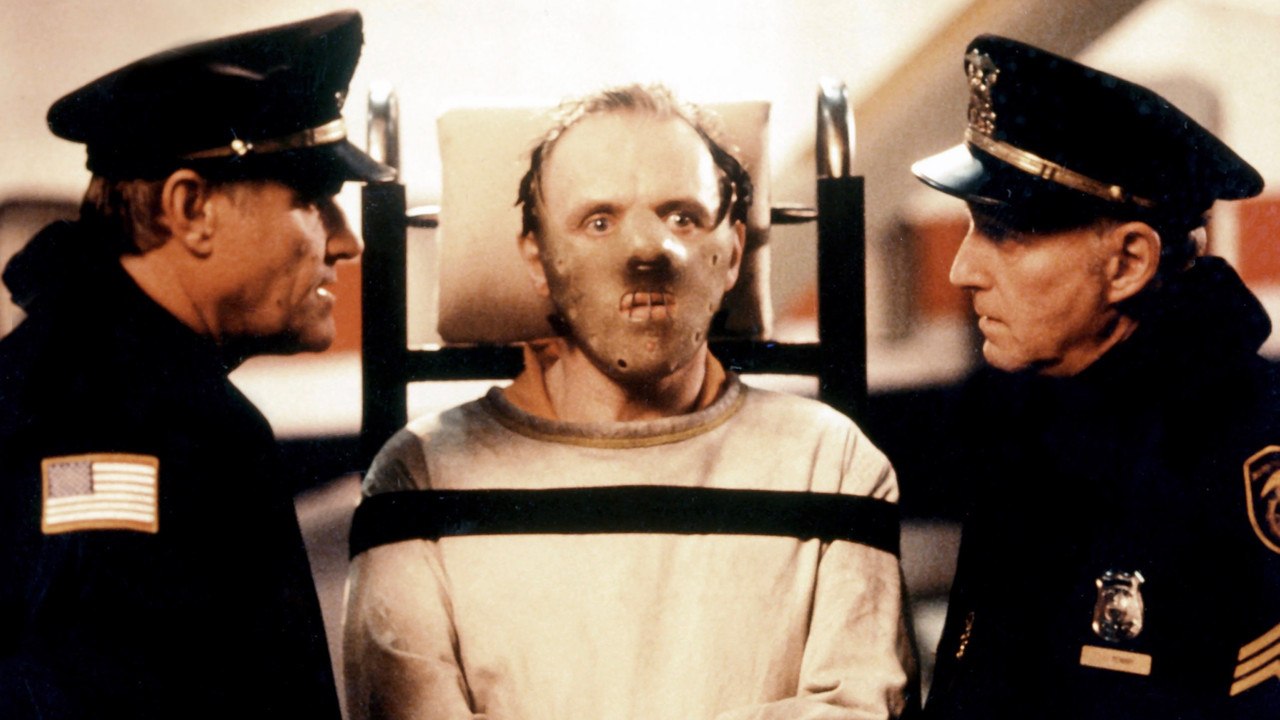
Jonathan Demme’s adaptation of Thomas Harris’ novel is our top pick because it fires on every level a psychological thriller can. Jodie Foster’s FBI trainee Clarice Starling seeks help from imprisoned psychiatrist Hannibal Lecter (Anthony Hopkins) to catch a serial killer known as Buffalo Bill, and their conversations through the glass are the real action: quid pro quo, each probing the other’s wounds. Demme and cinematographer Tak Fujimoto shoot those exchanges in direct-to-camera close-ups, so you feel Lecter looking straight at you. It became only the third film to win the Big Five Oscars (Picture, Director, Actor, Actress, Adapted Screenplay for Ted Tally), after It Happened One Night and One Flew Over the Cuckoo’s Nest. It still feels modern, especially in how it frames Clarice navigating a world of men who underestimate her. Where to watch: An Orion film now in Amazon’s MGM library, so it tends to stream on Prime Video or MGM+; rent elsewhere.
Newer Psychological Thrillers Worth Your Time
The list above skews toward films that have proven their staying power, but the genre is alive and well. These recent releases are strong candidates for future rankings, and a few could crack the top 25 within a decade:
- The Invisible Man (2020): Leigh Whannell turns a Universal monster into a story about coercive control, with Elisabeth Moss superb as a woman no one believes. A Universal release, so look on Peacock.
- Speak No Evil (2022): Christian Tafdrup’s Danish film about a polite couple who can’t bring themselves to leave a nightmarish weekend visit is crueler than its 2024 James McAvoy remake. The original is the one to see.
- Anatomy of a Fall (2023): Justine Triet’s Palme d’Or winner uses a courtroom to pick apart a marriage, with Sandra Hüller as a novelist accused after her husband’s death.
- Saltburn (2023): Emerald Fennell’s satire stars Barry Keoghan as an Oxford student insinuating himself into an aristocratic family. It is an Amazon MGM release, so you’ll find it on Prime Video.
- Longlegs (2024): Osgood Perkins’ serial-killer film with Maika Monroe and Nicolas Cage owes obvious debts to The Silence of the Lambs and leans further into horror than most entries here.
For the very newest releases, theaters remain the best first stop, since most studio thrillers now take several weeks to reach streaming.
Three Double Features to Build a Night Around
If you want the films to talk to each other, pairing them is the move. These combinations sharpen what each film does:
- Persona + Mulholland Drive: Two women, merging identities, decades apart. Watch Bergman first and Lynch’s influences become obvious.
- Gaslight + The Invisible Man: The 1944 original manipulation plot next to its 2020 descendant shows how the genre’s understanding of abuse has deepened.
- Perfect Blue + Black Swan: Performers whose sense of self fractures under pressure, one animated in Tokyo, one live-action in Manhattan.
If you are after pure fear rather than mind games, our ranking of the scariest movies of all time picks up where this list leaves off.
Seeing Them on a Big Screen in New York
Streaming is convenient, but these films were designed for darkened rooms full of strangers who gasp at the same moment. New York’s repertory scene programs psychological thrillers constantly. Film Forum on West Houston runs regular Hitchcock retrospectives, Metrograph on Ludlow Street favors 35mm prints of Lynch, Roeg and Polanski, and IFC Center’s midnight series is where cult picks like Perfect Blue tend to resurface. In Brooklyn, Nitehawk in Williamsburg and Prospect Park pairs genre screenings with food and drink, BAM Rose Cinemas programs international series that often include Park Chan-wook and Bong Joon-ho, and Anthology Film Archives in the East Village leans toward the more experimental end. Museum of the Moving Image in Astoria is worth the trip for its curated series.
FAQ
What is the difference between a psychological thriller and a horror movie?
Horror aims to frighten you, often through a supernatural or physical threat, while a psychological thriller builds suspense through a character’s perception, memory or sanity. The overlap is large. The Shining and A Tale of Two Sisters sit in both camps, but a film like Gone Girl or Zodiac is pure thriller with no horror trappings at all.
What is the best psychological thriller of all time?
Our pick is The Silence of the Lambs (1991). It combines a flawless script, two legendary performances from Jodie Foster and Anthony Hopkins, and Jonathan Demme’s unnerving direct-to-camera style, and it remains one of only three films to win all five major Academy Awards. Vertigo is the critics’ favorite and a close second.
Which psychological thriller movies have the best twists?
Memento, Shutter Island, A Tale of Two Sisters, Psycho and Oldboy all deliver reveals that reframe everything before them. Mulholland Drive has a structural flip more than a twist, and Gone Girl hides its biggest surprise at the midpoint rather than the end. Avoid trailers and plot summaries for all of these.
Where can I stream these movies right now?
Studio ownership is the best predictor. Universal titles like Psycho, Vertigo and Get Out usually stream on Peacock. Warner titles like The Shining, Se7en and Misery sit on HBO Max. Paramount’s Rosemary’s Baby, Zodiac and Shutter Island lean toward Paramount+, while Fox titles like Black Swan and Gone Girl land on Hulu or Disney+. Criterion releases such as Don’t Look Now and The Vanishing live on the Criterion Channel. Nearly all can be rented on Apple TV or Prime Video.
What is a good psychological thriller for someone new to the genre?
Start with Gone Girl or Get Out. Both are accessible, gripping and modern, with clear stakes and big payoffs. From there, Psycho and The Silence of the Lambs are the essential classics, and Memento is a fun step up in complexity.
Are any of these too intense for casual viewers?
Oldboy, Se7en and Misery contain graphic violence, and Black Swan includes body-horror imagery and self-harm. Prisoners depicts torture. Gaslight, Vertigo, Rosemary’s Baby and Zodiac are much more about dread than gore, so they make better choices if you want tension without explicit brutality.